Darkrooms, Nightclubs and Boardrooms: My Journey Behind the Lens
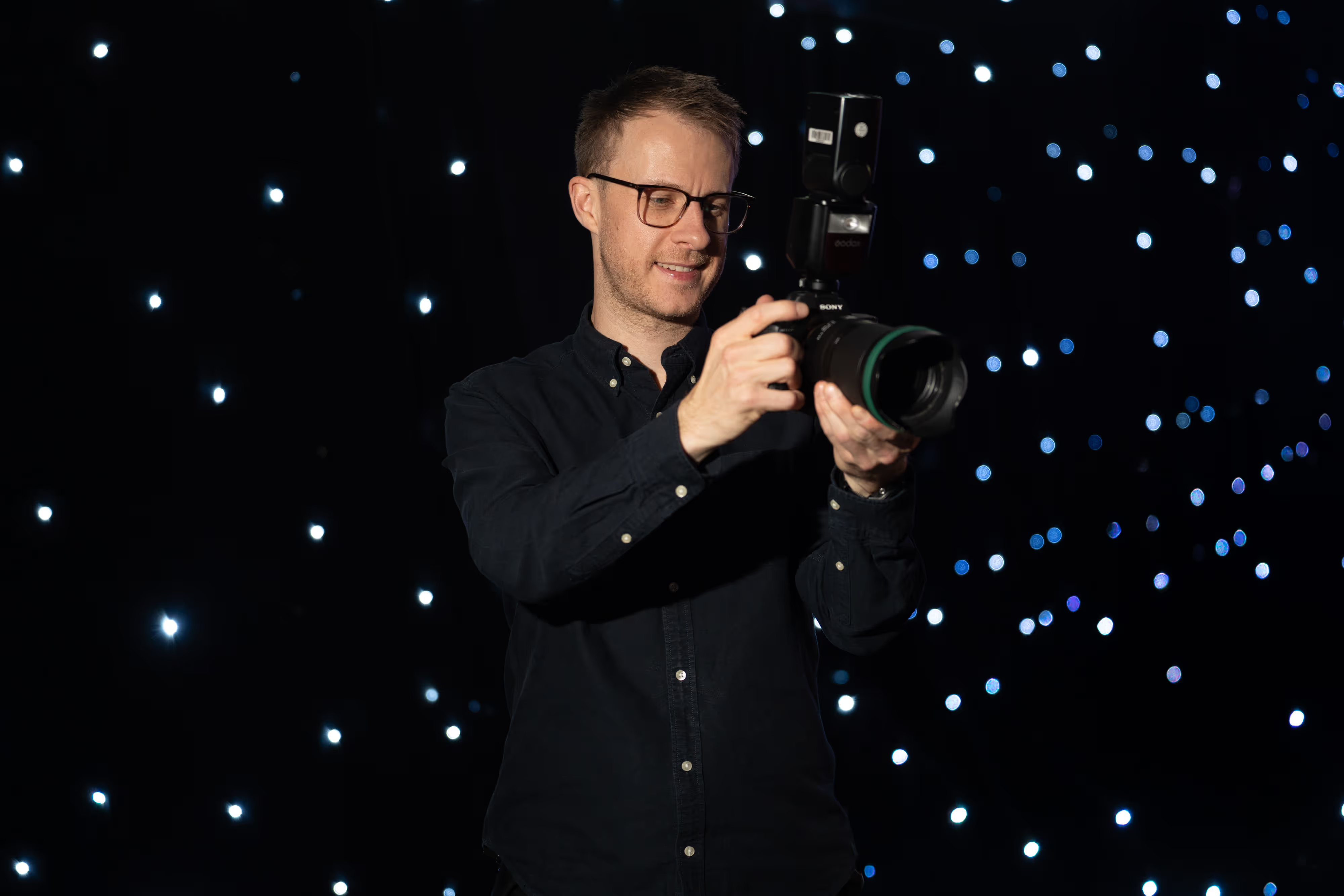
People often ask me how I ended up as a commercial photographer. Usually, they expect a story about a sudden spark of inspiration or a mid-career pivot. But for me, the path to founding decoy was less of a sharp turn and more of a steady build that started long before I ever stepped foot into a corporate office.
The Early Days: Nature Photos and Silly Shorts
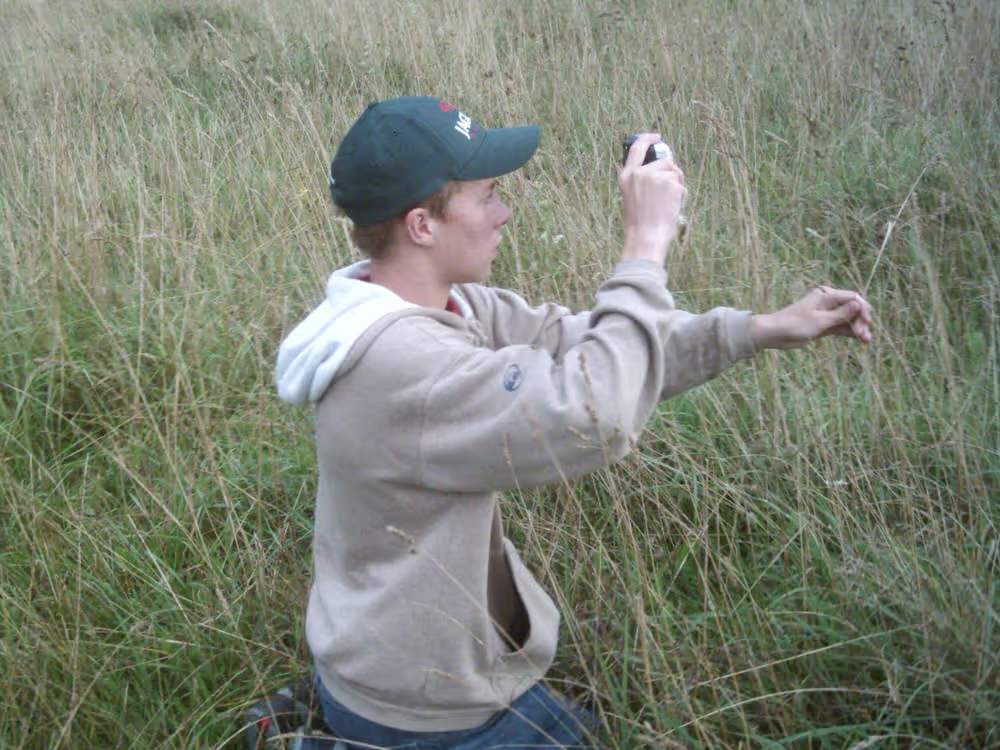
My interest in cameras started young. Whether it was the tactile feel of an old film camera or the clunky novelty of early digital models, I was hooked. I remember messing around with a friend, making silly short films and even trying our hand at professional nature photography. We actually tried to sell some of those early shots as stock images. Looking back, I admire the ambition, even if the results were not quite Getty-ready just yet.
By the time I reached school, that curiosity had turned into a genuine passion for art. Photography became my go-to medium for projects because it was the quickest, most exciting way to translate an idea in my head into something tangible.
The Foundation: Business, Media, and Stinky Chemicals
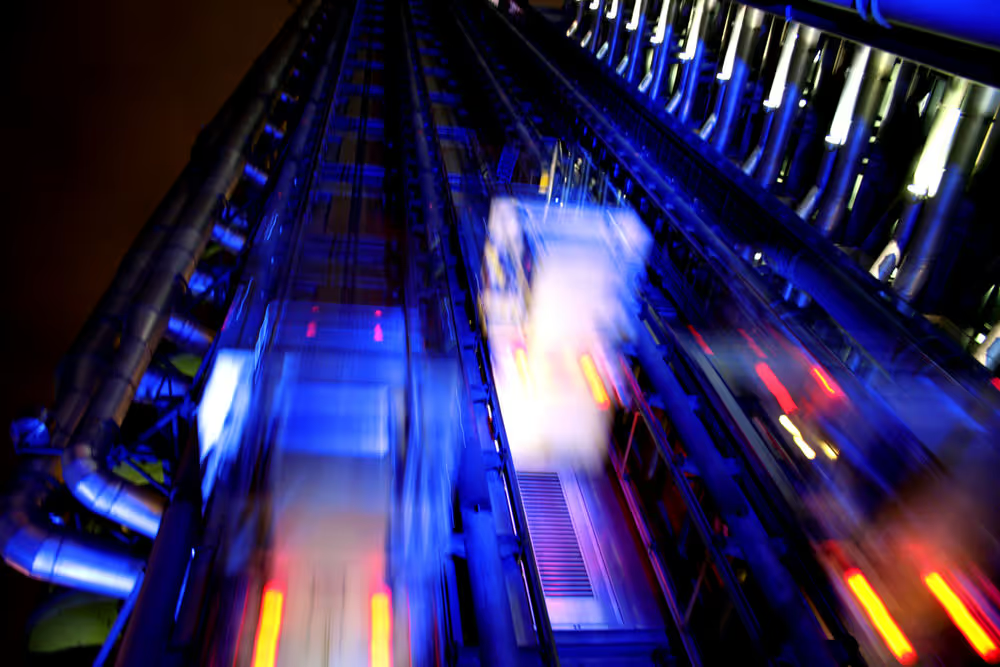
Moving into Sixth Form, I chose a combination of Media Studies, Business, and Information Technology. Interestingly, Photography was not actually offered at my Sixth Form, so I had to take it as a night course at my local college to make sure I could keep developing that side of my skill set.
The course was a deep dive into the technical and creative fundamentals of the craft, but one part of the experience really stood out. While photography is now almost entirely digital, there is something incredibly exciting about the traditional process. Developing your own film and creating prints using chemical methods in a darkroom felt like magic, though I can vividly remember that the chemicals themselves absolutely stunk!
At the time, I just picked those subjects because I enjoyed them. I did not realise then that I was inadvertently providing myself with the perfect early grounding for the role I have developed today. Media Studies was a revelation. Analysing film and TV opens your eyes to inspiration everywhere, from lighting to composition. I loved the process of writing, producing, directing, and shooting short films and music videos. It came naturally to me, and it led me straight to university to study for a BSc in Film Production Technology.
The Student Union and the Signature Style
That university course was the perfect balance of creativity and technology. We did everything from VFX to TV studio production and even designing DVD covers and menus (remember those?). It was a technical degree rather than a purely creative one, which meant I understood the "how" as well as the "why."

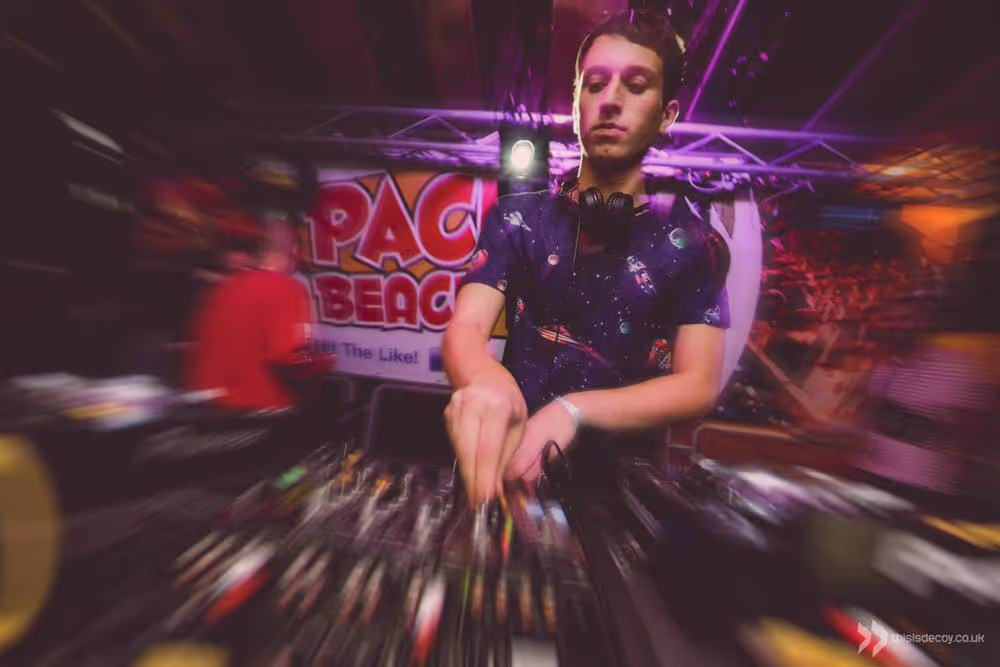
It was during this time that I started taking photos at the weekly club nights at the Students’ Union. This was where I developed my own signature style. I used a slow shutter speed and would physically twist the camera as I took the photo.The flash would freeze the people in the frame, while the coloured club lighting would swirl around in different patterns depending on how I moved the camera. It was a masterclass in capturing energy.
The Birth of Decoy Media
After university, I started Decoy Media with my friend, Phil. We launched the company through a six-month graduate business startup scheme, which gave us access to a small amount of funding for equipment, workshops on how to run a business, and a business mentor.
That mentor was invaluable. They provided me with a lot of real-world knowledge on the mechanics of running a company that you just do not get in a technical degree. We were not immediately successful by a long shot, but we were learning. Fast forward a few years later, Phil left the business and I moved to Manchester.
In those early Manchester days, I cut my teeth working as a gig photographer and shooting in nightclubs. This eventually led to me shooting for some of the biggest names in the industry, including The Warehouse Project in Manchester, Hospitality, and fabric in London. I even travelled further afield to shoot for Outlook Festival in Croatia.
One particular highlight from this period was taking a photo of Craig Charles DJing. The shot was eventually chosen as the cover art for one of his compilation albums, which was a fantastic moment of validation for all those late nights spent in front of the decks.

I believe working in all these dark, smoky, and sweaty environments tested me. When you have to get the perfect shot in a high-pressure, low-light environment with thousands of people moving around you, it makes you a better photographer. You learn to react instantly and solve problems on the fly. This high-pressure experience is exactly what allows me to capture the impactful PR photography needed to grab attention.
These experiences shaped decoy and what the business is today.
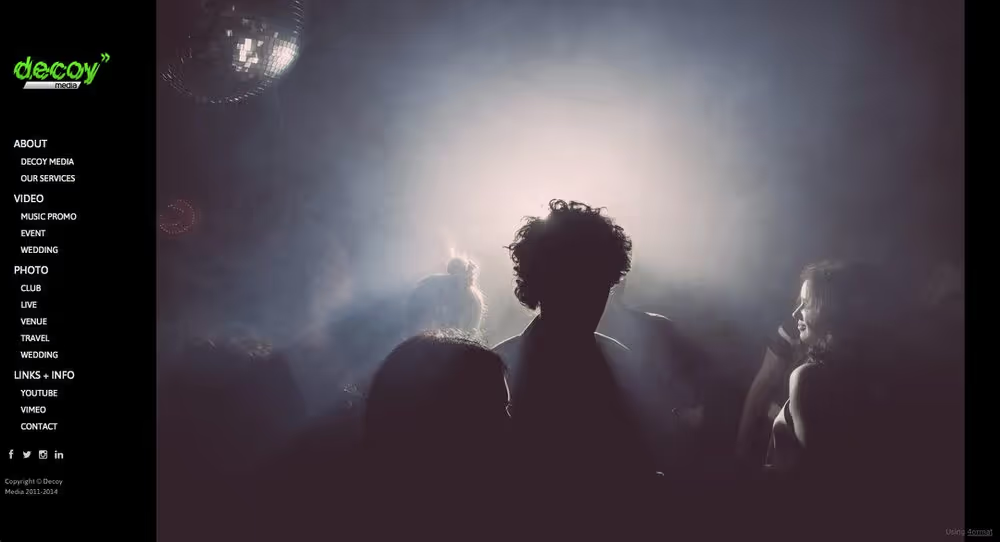
You can see how far the studio has come by exploring our latest brand and website refresh.
Why This Matters for My Clients
Everything has come full circle. The Business and IT background helps me understand the commercial pressures my clients face. The technical training from my degree ensures I am always thinking about the story behind an image, not just the technical settings.
I have spent my life learning how to look at things differently. Whether I am shooting a corporate summit or a professional headshot, I bring that same lifelong obsession with the craft and years of high-pressure experience to every project.
I would love to hear about the visual story you want to tell for your brand. If you are looking for a partner who understands the business as well as the lens, let’s have a chat.
Get in touch to discuss your project and receive a free quote.
More insights & news
From creative vision to measurable results: explore our strategies for high-impact event coverage, brand consistency, and professional commercial production.

Photography Services
We specialise in professional imagery that tells your company’s story. While we are a leading event photographer in Manchester, we bring that same level of detail to capturing the people and personalities behind the brand.
From the energy of a major summit to the precision of a high-end executive session, we ensure every project is delivered with 15+ years of creative and technical expertise.